
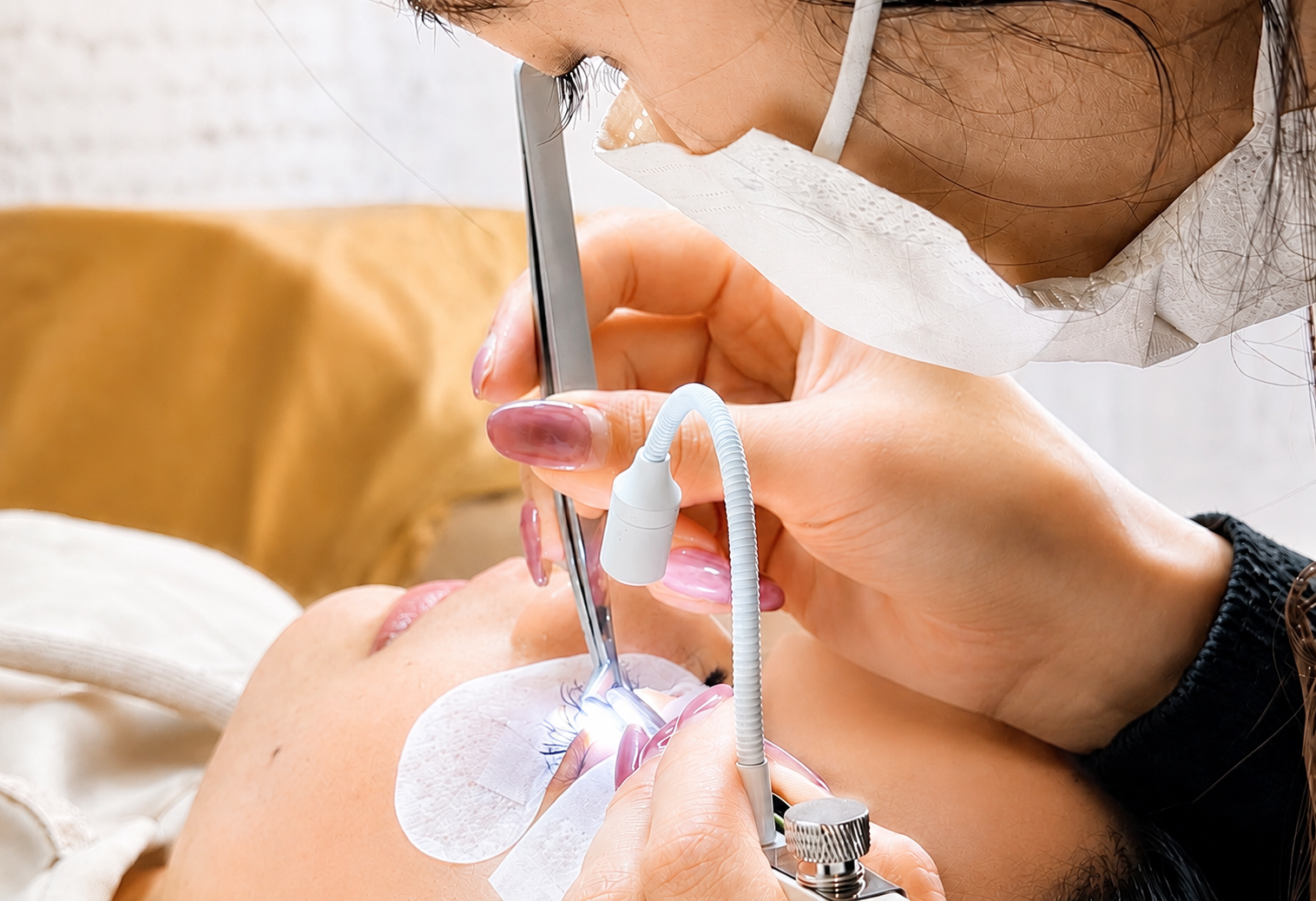
LED Eyelash Extensions
Meet LED Lashes: No more 24-hour water rule. No more waiting for the glue to fully set. Just a stronger, longer-lasting result, cured in seconds. Now available at SORA.
New Service Launch:
LED Lash Extensions
You asked, we listened and then we spent months quietly trialling it before saying a word.
For a while now, a number of you have asked us about LED-cured lash extensions, a technique that's been gaining traction internationally for its retention and comfort. Rather than rush it onto the menu, we brought in the system, trained on it properly, and offered it first to a group of our regulars who wanted to be part of the trial. The feedback has been overwhelmingly positive — better retention, more comfortable application, and results our trial clients are genuinely excited about. Now we're ready to bring it to everyone.
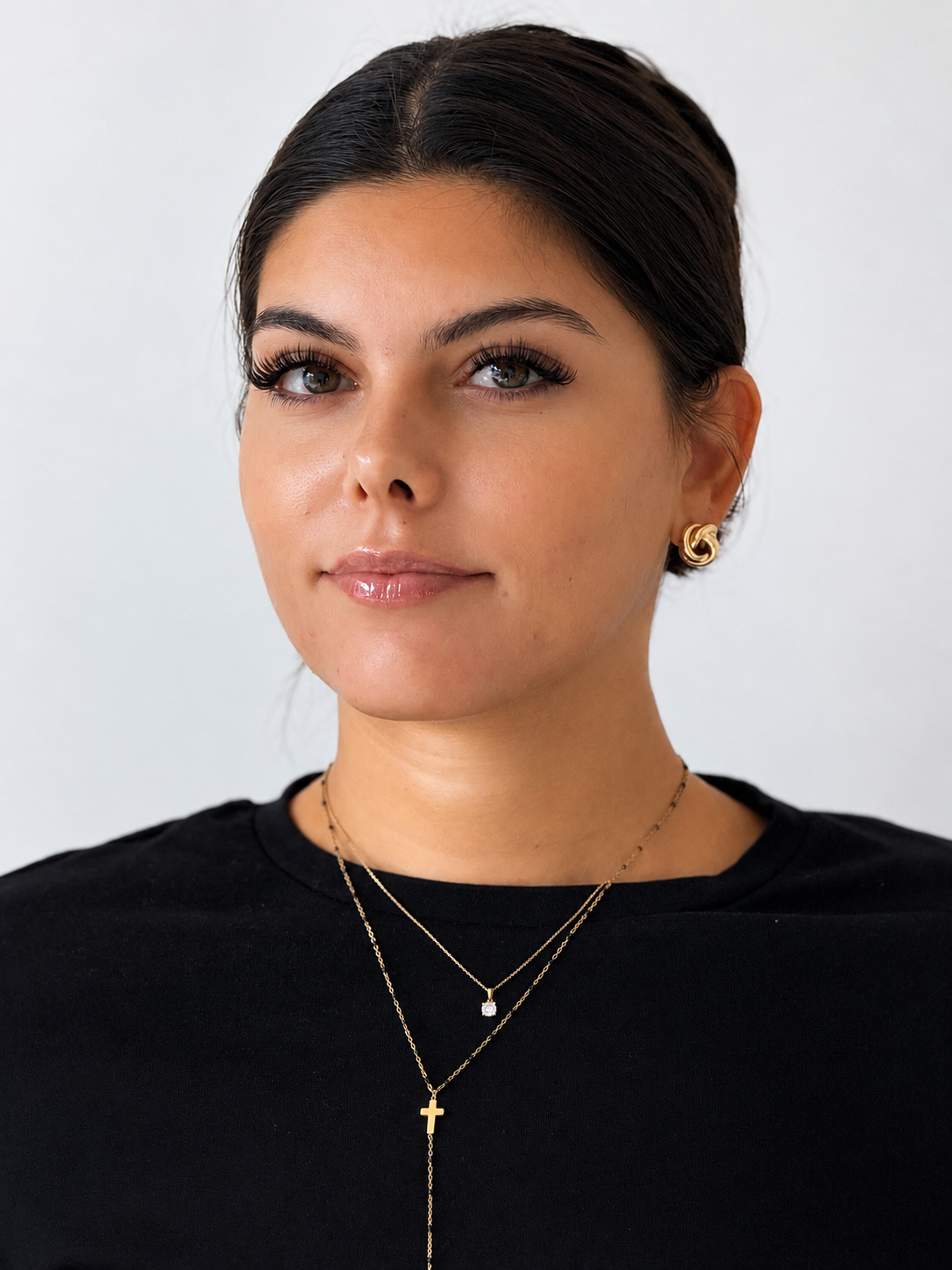
What makes it different
Traditional lash extensions are bonded with glue that air-cures gradually, which is where the classic "24-hour no water" rule comes from, and why retention can vary depending on humidity, oils, and how carefully that curing window is respected. Outside factors during that window — unexpected rain, sweat from exercise, or simply not being able to follow the strict aftercare to the letter, can all affect how well the bond sets, which is part of why retention on traditional extensions isn't always consistent from client to client.
LED Lash Extensions use a UV/LED light-cured adhesive instead. The light cures the bond in seconds rather than hours, which means a fully set, stable bond before you even leave the chair. In practice, this has meant noticeably improved retention for our trial clients, and none of the usual 24-hour water restriction.
The system we use
We use a German-engineered, professional-grade LED lash curing system, built specifically for lash extension application and backed by its own published safety testing and technical documentation. As with any system like this, it's only ever applied by a trained, certified technician, never a shortcut, always a proper process.
Is it safe?
Yes — when applied by a trained professional, which is how we exclusively offer it. The light itself operates at a low-power wavelength specifically engineered for this use, well below the intensity of a standard gel nail lamp or tanning bed, with no direct eye exposure during application
. It's also worth understanding that the adhesive is still a cyanoacrylate-based lash glue (the same base ingredient used in most professional lash adhesives) — the LED curing process doesn't remove that ingredient, it simply cures it faster and more completely. What it does appear to reduce, based on both manufacturer data and our own trial group's experience, is glue fume exposure during application and reaction rates in some clients with prior sensitivity to traditional lash glue.
-
Clients who've struggled with poor retention on traditional extensions
Anyone who's found regular lash glue fumes uncomfortable during application
Clients who want to get back to normal activity (swimming, sweating, no water restrictions) sooner after their appointment
Clients chasing longer-lasting, lower-maintenance extensions overall
-
this treatment isn't suitable for clients who have:
Epilepsy or a history of seizures triggered by light
Thyroid disorders
Polymorphous light eruption or photosensitivity conditions
Currently undergoing radiation or chemotherapy
Hemophilia or other bleeding disorders
Taking photosensitising medication (certain antiepileptics, neuroleptics, or systemic dermatological medications)
Any active skin condition in the treatment area — open wounds, unhealed scars or keloids, cold sores/herpes, psoriasis, fungal infections, sunburn, or skin cancer
A confirmed allergy to cyanoacrylate-based lash adhesive — this system still uses a cyanoacrylate glue, so a genuine allergy isn't resolved by switching to LED curing
Any current eye irritation or infection, the same as with any lash treatment
Pregnant or breastfeeding clients need medical clearance from their doctor before this treatment.
If you're unsure whether any of this applies to you, talk to us before booking — we're happy to assess,
-
t's LED, not a tanning-style UV lamp — it won't tan or darken your skin. There's a real difference between a UV lamp built for tanning and the UV LED light our system uses to cure lash adhesive. Ours is designed purely to set the glue, not to affect your skin's pigment.
We use a low, specific wavelength — 395nm — chosen for this exact purpose. It's not a broad-spectrum light; it's tuned to one job.
Our adhesive is a certified UV lash glue — no resins, no gels. What's curing under the light is a purpose-built lash adhesive, not a generic bonding agent.
The power output is a fraction of what you'd get from a gel nail lamp or a solarium. Our system runs at roughly 6 times less power than an average 36W gel nail curing lamp, and around 1,000 times less power than a professional solarium, which can run at 5,000W.
Exposure time per client is extremely short. Each lash typically cures in about 1.5 seconds. Even across a full set of 100 lashes, that's roughly 150 seconds — two and a half minutes — of total light exposure. Compare that to a tanning bed session of 20+ minutes, or a typical nail lamp cure of similar length.
LED-based curing isn't new technology — it's been used safely in medicine and dentistry for around two decades, including in dental procedures to set composite fillings.
"UV" doesn't automatically mean harmful. It's a common assumption, but not an accurate one — every UV-emitting device needs to be assessed individually on its own wavelength, exposure time, and light intensity, not lumped in with tanning beds just because it shares the letters "UV."
We didn't just assume ours was safe — we checked. Our system holds CE, FCC, RoHS, and DIN EN 62471 certification. DIN EN 62471 specifically is the internationally recognised standard for testing how light affects skin and eyes — and our system has passed it.